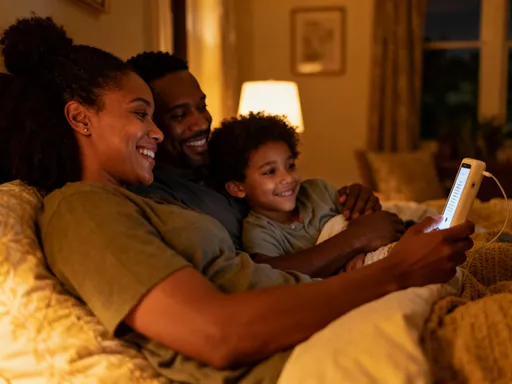
Tested 7 Smart Sensors in 2 Homes: The One That Finally Brought Us Closer
You know that moment when you’re lying in bed, wondering if the back door is locked? Or when your teenager sneaks in late, and you wish you could worry less? I’ve been there. After months of restless nights and unnecessary tension, I tried smart door and window sensors—not for high-tech thrills, but for peace. What I found surprised me: one simple device didn’t just secure our home—it quietly transformed how we communicate, trust, and care for each other.
The Nighttime Worry That Changed Everything
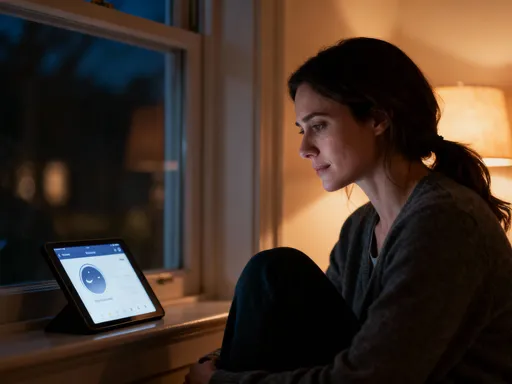
It started small, like most habits do. A quick walk through the house before bed—checking the front door, the kitchen window, the sliding glass door to the patio. At first, it felt responsible. Then it became routine. Then, honestly, it became exhausting. I didn’t realize how much mental energy I was spending on these nightly checks until I noticed how tired I felt in the mornings—not from lack of sleep, but from the weight of constant vigilance. My mind would race: Did I lock the garage? Was the basement window closed during the storm? What if someone came in while we were asleep?
And it wasn’t just me. My partner and I started repeating the same questions every night: “Did you lock the back door?” “Are you sure the kids closed their window?” These weren’t accusations, but they carried a quiet tension. Small things, yes—but over time, they added up. Our home, which should have been our safe place, began to feel like a checklist we could never fully complete. I started to wonder: isn’t there a better way? Not something flashy or complicated, but something simple that could take just one worry off my plate?
That’s when I began looking into smart door and window sensors. I wasn’t trying to turn our house into a futuristic fortress. I didn’t care about voice-controlled lights or robot vacuums. I just wanted to stop asking the same questions every night. I wanted to feel confident that the doors were locked without having to physically check them. I wanted peace of mind—not a tech upgrade, but a life upgrade. And honestly, I didn’t expect much. I thought, at best, it might save me a trip downstairs. But what happened was much bigger than that.
Why I Tried Seven Different Sensors (And What I Learned)
I’ll admit, I went a little overboard. When I decided to try smart sensors, I didn’t just buy one. I tested seven different models across two homes—one was my own, with two teenagers and a dog that loves to nudge doors open, and the other was my sister’s, where she lives with her two young kids and an always-busy schedule. I wanted to see how these devices worked in real life, not in a showroom or a five-star review. I wanted to know how they held up when the house was messy, when kids forgot to close doors all the way, or when the Wi-Fi acted up.
Some sensors were too sensitive—sending alerts every time the wind shook the window. Others were too quiet, failing to notify us when a door had been left wide open for over an hour. One brand required a hub that cost almost as much as the sensors themselves, and the app was so cluttered I gave up after ten minutes. Another had a loud alarm that went off when the battery was low—waking up the whole house at 2 a.m. Not exactly calming.
But the ones that stood out weren’t the most expensive or the most feature-packed. They were the ones that just… worked. The kind you could set up in minutes, forget about, and trust. I learned that what matters most isn’t the technical specs—it’s how the device fits into your life. Does it reduce stress, or add to it? Does it make you feel more in control, or more confused? One model, in particular, felt different from the start. It had a clean app, simple notifications, and a setup process that didn’t require reading a manual. Most importantly, it was something everyone in the house could use—not just me. My teenager downloaded the app on her phone. My partner checked it from his work laptop. Even my sister’s five-year-old learned to recognize the little green lock icon on the screen.
That’s when I realized: the right technology doesn’t draw attention to itself. It fades into the background and just makes life easier. And that one sensor—the one that balanced simplicity, reliability, and shared access—was the one that stayed.
How a Tiny Sensor Became Our Family’s Communication Tool
Here’s the thing I never expected: the sensor didn’t just tell us when a door opened—it changed how we talked to each other. Before, when my daughter came home late from a friend’s house, I’d be sitting on the couch, phone in hand, debating whether to text: “Are you on your way?” “Did you leave yet?” “Please be safe.” I didn’t want to nag, but I couldn’t help it. The not-knowing made me anxious. And when she finally walked in, I’d say something like, “You’re late,” which never ended well.
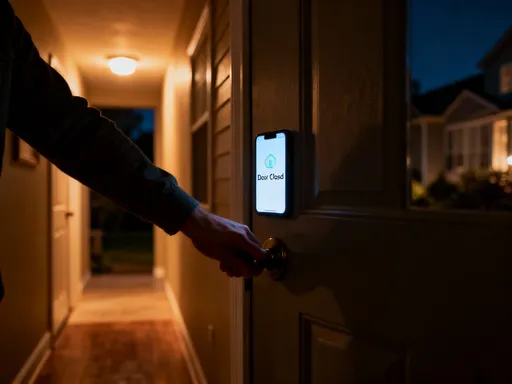
Now, it’s different. When the front door opens at 10:30 PM, I get a quiet notification on my phone: “Front door opened.” No panic. No guessing. No need to send a worried text. I can just relax and trust that she’s home safe. And get this—she started using it too. One night, she texted me before I could even check: “Mom, the sensor just went off. I’m home. You can go to sleep.” That moment hit me right in the heart. It wasn’t just about security—it was about care. She knew I worried, and she used the tool to ease my mind.
It became a new kind of language in our house. A silent “I’m here.” A gentle “We’re all safe.” My son, who used to roll his eyes at anything “parent-related,” now says, “The app says the garage is open—should I go close it?” without being asked. It’s not because he’s suddenly more responsible (though that helps). It’s because the sensor made responsibility feel lighter, less like a rule and more like a shared effort.
And for my partner and me? We stopped arguing about who forgot to lock the door. Instead of blaming, we now say, “The sensor caught it—thanks for the alert.” It sounds small, but that shift—from suspicion to teamwork—made a big difference in how we relate to each other.
Setting It Up for Real Life (Not a Tech Demo)
I was nervous about the setup. I’m not a tech expert. I can barely program the coffee maker. So when I opened the box and saw two small white pieces—the sensor and the magnet—I braced myself for frustration. But within five minutes, it was done. Peel-and-stick. No tools. No drilling. Just align the two parts on the door and frame, download the app, and sync them with a tap. That was it.
We started with the front door, since that’s the one we use most and worry about the most. Then we added the back patio door—our dog’s favorite escape route—and the basement window, which tends to stick and sometimes doesn’t close all the way. We didn’t cover every window in the house. That would’ve been overkill. We focused on the spots that mattered, the ones that kept us up at night.
The app was simple—just a floor plan view with little icons showing which doors and windows were open or closed. Green meant secure. Red meant open. We shared access with both kids and my partner, so everyone could check anytime. No passwords to remember, no complicated permissions. And the notifications? Gentle. Not a loud beep, not a flashing red alert—just a soft ping and a message. You could even customize when you wanted to be notified. For example, we turned off alerts during the day when the kids were coming and going from school, but kept them on at night.
One weekend, my parents came to visit. On their first night, my mom said, “I like knowing the front door is locked without having to ask anyone.” That stuck with me. It wasn’t just helping us—it was helping our guests feel more at ease, too. The sensor wasn’t replacing human connection; it was making space for more of it.
When Trust Meets Technology (And Why It Matters)
I’ll be honest—I had concerns at first. Was this crossing a line? Was I turning into one of those parents who monitors every move? But the more I used it, the more I realized: this wasn’t about control. It was about trust with support. For my teenagers, it gave them freedom. They didn’t have to call or text to say they were home. The sensor did it for them. And for me, it gave me reassurance without intrusion. I wasn’t watching them—I was simply knowing.
For my partner and me, it removed the little friction points in our relationship. No more “I thought you locked the door” or “You always forget the garage.” Instead, we could say, “The sensor let us know,” and fix it together. It turned what used to be a source of tension into a shared system we both relied on.
And here’s what surprised me most: it actually improved our conversations. We talked less about rules and more about responsibility. We started saying things like, “Thanks for closing the door—the sensor showed it was open, but I’m glad you caught it.” It made accountability feel kind, not critical. The device didn’t replace trust—it strengthened it. It was like having a quiet partner in parenting, one that didn’t judge, didn’t nag, but just helped us stay connected.
Technology often feels cold, but this felt warm. It wasn’t about surveillance. It was about care. It was a way of saying, “I trust you, and I’ve got your back.”
Small Alerts, Big Emotional Relief
The real benefit wasn’t in the notifications—it was in the silence. The absence of worry. The ability to go to bed without one last check. The freedom to relax on the couch without mentally ticking off the locks. That’s the gift this little sensor gave us: mental space.
I remember one rainy night when the wind was howling. I was half-watching a show, half-worried about the basement window we sometimes forget to close. Then—ping. The app said, “Basement window opened.” I went down, closed it, and avoided what could’ve been a small flood. But the bigger win? The relief. Not just that we prevented water damage, but that I didn’t have to wonder. The sensor did the watching so I could stop worrying.
And now, when I see “Front door closed” or “Patio door locked,” it’s not just data. It feels like a deep breath. A quiet “all is well.” My daughter noticed it too. “Mom,” she said one morning, “I like that the house kind of takes care of itself now.” And she’s right. It’s not magic. But it feels close.
These small alerts added up to something big: less anxiety, more trust, better sleep. I didn’t realize how much energy I was spending on low-level fear until it was gone. And when it disappeared, something else appeared in its place—calm. Presence. The ability to just be in my home, without constantly managing it.
More Than Security: A Calmer, Closer Home
Looking back, I didn’t buy a smart sensor to prevent break-ins. I bought it to prevent burnout. To stop the cycle of worry, checking, and second-guessing. And while it did make our home more secure, its greatest impact was emotional. It didn’t change our lives in a dramatic way—it improved them in quiet, meaningful ones.
We didn’t just get alerts. We got ease. We got fewer arguments. We got more trust. We got our evenings back. And in a strange way, we got closer. The sensor became a silent thread connecting us—reminding us that we’re looking out for each other, even when we’re apart.
For anyone who’s ever lain awake wondering about a door, a window, or a loved one’s safety—this isn’t just about technology. It’s about peace. It’s about creating a home that doesn’t just protect you, but supports you. A home that helps you breathe easier, trust more, and love without fear.
And sometimes, the smallest devices bring the biggest changes. One quiet notification at a time, we found our calm. And in that calm, we found each other again.