What If Your Bedtime Routine Could Strengthen Family Bonds—and Improve Your Sleep?
Imagine winding down at night, not just with a book or phone scroll, but by reliving a shared laugh from last weekend’s picnic, or hearing your child’s voice say “I love you” in a bedtime recording from six months ago. What if the same technology preserving these moments could also calm your mind, ease your breathing, and help you fall asleep faster? This isn’t fantasy—it’s how smart memory-sharing tools are quietly transforming family life and sleep routines. For many of us, bedtime has become just another chore, a rushed handoff between the chaos of the day and the promise of rest that often doesn’t come. But what if those quiet minutes before sleep could become something more—something meaningful, soothing, and deeply connecting?
The Hidden Cost of Poor Sleep in Everyday Family Life
Sleep. It’s something we all need, yet so many of us go without enough of it—especially as parents, caregivers, and the emotional anchors of our homes. You know the feeling: lying in bed, eyes closed, but your mind racing through unfinished tasks, tomorrow’s schedule, or that conversation you wish you’d handled differently. The weight of responsibility doesn’t disappear when the kids are in bed—it often grows heavier. And when we don’t sleep well, everything feels harder. We’re more irritable, less patient, and slower to respond with kindness. Our ability to listen, to be present, to laugh at the little things—it all dims when we’re running on empty.
But here’s what we don’t talk about enough: poor sleep isn’t just a personal issue. It affects the whole family. A tired mom is more likely to snap at her partner or miss a child’s subtle cue of sadness. A dad who’s been up three nights in a row might withdraw, not because he doesn’t care, but because he’s emotionally drained. And kids? They pick up on it. They feel the tension, the short tempers, the lack of joy in the air. The ripple effect of one person’s sleeplessness can unsettle the entire household. We reach for solutions—sleep teas, white noise machines, meditation apps—but what if the real fix isn’t just about shutting off the brain, but about soothing the heart?
Research shows that emotional stress is one of the top contributors to insomnia, especially in women over 30 who often carry the mental load of family life. The mind doesn’t just shut down because the clock says it’s time. It needs to feel safe, settled, and connected. And that’s where something as simple as remembering a happy moment with your family can make a surprising difference. It’s not about ignoring stress—it’s about giving your nervous system a reason to relax. When we feel loved, seen, and grounded in positive emotions, our bodies respond. Our breathing slows. Our muscles soften. And slowly, sleep becomes not a battle, but a welcome return.
How Family Memories Influence Emotional Well-being and Rest
Think about the last time you laughed so hard your stomach hurt—maybe it was during a silly game night, or when your toddler said something unexpectedly funny. Even now, just recalling that moment might bring a smile to your face. That’s not just nostalgia. That’s your body responding to emotional safety. Positive memories activate the parasympathetic nervous system, the part that tells your body, “You’re okay. You can rest now.” When we revisit joyful moments—especially those shared with loved ones—our brain releases oxytocin and reduces cortisol, the stress hormone that keeps us awake at 2 a.m.
It’s why so many of us instinctively turn to old photos when we’re feeling low. A picture of your daughter’s first day of school, your husband grilling in the backyard, or your parents dancing at your wedding—they’re not just images. They’re emotional anchors. And science backs this up. Studies have shown that recalling positive autobiographical memories can improve mood, reduce anxiety, and even enhance sleep quality. The brain doesn’t always distinguish between a real-time experience and a vividly recalled one. So when you close your eyes and hear your son’s giggle from a video you watched earlier, your brain treats it almost as if he’s right there with you.
This is especially powerful for women in midlife, who may be navigating hormonal changes, caregiving for aging parents, or feeling a sense of loss as children grow older and leave home. These transitions can bring up complex emotions—pride, sadness, loneliness—all of which can interfere with rest. But when we intentionally reconnect with the love and joy that’s still present in our lives, we remind ourselves that we’re not alone. We’re part of a story that’s still unfolding, filled with moments worth holding onto. And that sense of continuity, of being rooted in love, is one of the most calming feelings we can carry into sleep.
Technology That Preserves More Than Photos—It Holds Emotion
We’ve all got thousands of photos on our phones—most of them never seen again after the day they were taken. But what if our devices could do more than just store images? What if they could preserve the warmth in your mother’s voice when she says your name, or the way your partner laughs when he’s trying not to wake the baby? That’s exactly what a new generation of family-focused tech is designed to do. These aren’t flashy gadgets or complicated systems. They’re simple, intuitive tools that help families capture not just moments, but feelings.
Imagine a digital photo frame that doesn’t just cycle through pictures, but plays short voice messages when you touch the screen. Or an app that lets you create a private timeline of your family’s life—birthdays, holidays, quiet Sunday mornings—where each entry includes a photo, a note, and a 30-second audio clip. These aren’t meant for sharing on social media. They’re built for intimacy, for quiet reflection, for moments like bedtime when you want to feel close to the people you love—even if they’re asleep down the hall or living miles away.
Unlike public platforms that thrive on comparison and performance, these tools are designed with privacy and emotional safety in mind. There are no likes, no comments, no algorithms pushing content you didn’t ask for. Just your family’s story, told in your own words and voices. And because they’re accessible from anywhere—a tablet in the bedroom, a smart display in the kitchen—they make it easy to weave memory-sharing into daily life. The technology isn’t the star. It’s the bridge. It helps us stay connected not just across distance, but across time—so a moment from five years ago can still feel fresh and comforting tonight.
Building a Shared Memory Ritual Before Bed
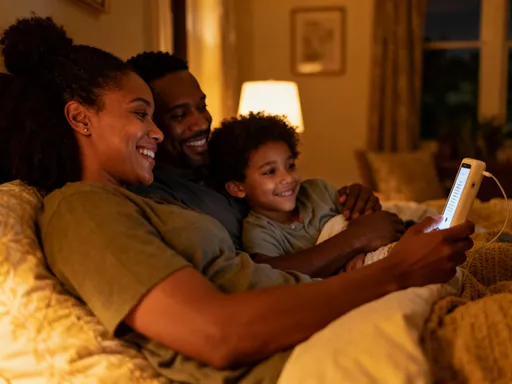
So how do we turn this idea into a real habit? It starts small. Instead of scrolling through emails or news feeds in the last minutes before sleep, what if you and your partner spent five minutes together looking at a shared digital album? Or what if, as part of your child’s bedtime routine, you played a short recording of them saying “I love you” from a family vacation last summer? These aren’t grand gestures. They’re tiny rituals, but they carry big emotional weight.
One mom I spoke with started using a voice-enabled frame in her bedroom. Every night, she taps the screen and hears her daughter’s voice saying, “Goodnight, Mama. I love you to the moon and back.” She says it helps her let go of the day’s stress and fall asleep faster. Another couple uses a shared playlist of short audio clips—birthday wishes, inside jokes, quiet “I’m thinking of you” messages they recorded during busy workdays. They play it on low volume as they drift off, and it’s become their way of reconnecting after long, separate days.
The key is consistency, not perfection. You don’t need to do this every single night. Even two or three times a week can make a difference. And it’s not just for couples or parents. Single moms, empty nesters, women caring for aging parents—this practice can be deeply comforting at any stage. The goal isn’t to create a perfect digital archive. It’s to create a moment of emotional warmth before sleep. It’s to end the day feeling a little more connected, a little more seen, a little more at peace. And over time, that small shift can transform not just your sleep, but your entire relationship with your family.
Real Families, Real Results: When Memory Tech Meets Better Sleep
Let me tell you about Sarah, a nurse and mom of two from Ohio. Her days are long, her shifts unpredictable, and her nights often restless. “I’d lie in bed replaying everything—medication errors I worried about, arguments with my husband, whether I packed enough snacks for school,” she told me. Then she started using a simple app that lets her save voice notes and photos in private family albums. Every Sunday, she records a short message summarizing the week—funny moments, small wins, things she’s grateful for. On weeknights, she plays one from the previous weekend before bed.
“It’s like a reset button,” she said. “Hearing my kids laugh or my husband say something sweet—it pulls me out of my head and back into my heart. I fall asleep faster, and I wake up feeling more like myself.” She’s not alone. Maria, a teacher in Texas, started recording bedtime messages from her son when he was five. Now he’s ten, and they still listen to the old ones sometimes. “It’s our little tradition,” she said. “He laughs at how little his voice was. And I… I just feel so full. Like I’m holding onto something precious.”
Then there’s Linda, a widow in her early 50s who lives alone. Her children are grown and scattered across the country. She uses a digital frame that cycles through family photos and plays audio clips her kids recorded for her birthday. “Some nights are harder than others,” she admitted. “But when I hear my daughter’s voice saying, ‘Mom, I love you,’ it’s like she’s right here. It helps me breathe. It helps me sleep.” These aren’t miracle cures. They’re real, simple practices that bring comfort in a way that pills or playlists never could. Because they’re not just about sound or images—they’re about love made tangible.
Making It Work for Your Family: Simple Tools and Easy Habits
You might be thinking, “This sounds nice, but I’m not tech-savvy. Where do I even start?” The good news is, you don’t need to be. Many of these tools are designed with people like us in mind—busy, emotional, maybe a little overwhelmed by gadgets, but deeply committed to family. Start with something small. Choose one app or device that feels manageable. Look for ones with simple interfaces, clear instructions, and strong privacy settings. Many offer free trials, so you can test them without commitment.
One easy first step? Create a shared album on a private platform where you and your partner or kids can add photos and voice notes. Set a reminder to add one thing each week—a funny moment, a thank-you, a “I’m proud of you” message. Or try a smart photo frame that supports audio. Place it in your bedroom or your child’s room, and load it with a few cherished clips. You don’t have to do it all at once. Even adding one voice message a month builds a collection over time.
Involve your family. Let your kids record a silly goodnight message. Ask your spouse to share a memory from your last vacation. Make it fun, not forced. The goal isn’t to create a perfect archive—it’s to create connection. And if you’re doing this solo, that’s okay too. Record messages to yourself—things you’re grateful for, moments you don’t want to forget. Your future self will thank you. The most important thing is to show up, even in small ways. Because consistency, not complexity, is what builds trust—with the technology, and with each other.
Beyond Sleep: Creating a Legacy of Connection and Calm
Here’s the beautiful truth: what starts as a bedtime habit can grow into something much bigger. Those voice clips, photos, and messages aren’t just helping you sleep tonight. They’re becoming a living archive of your family’s love. Years from now, your children might listen to these recordings and feel the same warmth you do now. They might hear your voice saying, “I’m so proud of you,” on a day when they need it most. These aren’t just digital files. They’re emotional heirlooms.
And the benefits go beyond memory. When we make space to reflect on the good, we train our brains to notice it more during the day. We become more present, more grateful, more resilient. We start to see our lives not as a series of chores and challenges, but as a story filled with love, laughter, and connection. That shift doesn’t happen overnight. But it begins in those quiet moments before sleep, when we choose to focus on what matters most.
So tonight, instead of reaching for your phone, consider reaching for a memory. Play a voice note. Look at a photo. Share a laugh from the weekend. Let yourself feel the love that’s already here. Because the best sleep doesn’t come from a perfect routine or the most expensive pillow. It comes from feeling safe, seen, and deeply connected. And that’s a gift you can give yourself—and your family—every single night.